https://omg10.com/4/11470828 English Literature : American Literature expr:class='"loading" + data:blog.mobileClass'>
Showing posts with label American Literature. Show all posts

Thursday, 30 July 2026

The Future of AI in 2026: Will Artificial Intelligence Take Jobs or Create Opportunities?

The Future of AI in 2026: Will Artificial Intelligence Take Jobs?

The Future of AI in 2026: Will Artificial Intelligence Take Our Jobs or Create New Opportunities?

Artificial Intelligence is no longer a futuristic idea. It is already part of our daily lives. From Google Search and YouTube recommendations to ChatGPT, AI image generators, smart assistants, online shopping, social media algorithms, and business tools — AI is everywhere.

But one big question is becoming more serious every day:

Will AI take our jobs, or will it create a new future for those who learn how to use it?

AI Is Not Just a Technology — It Is a New Era

For many years, people thought AI was something only scientists, engineers, or big tech companies used. But today, anyone with a phone or laptop can use AI tools.

Students use AI to understand difficult topics. Writers use AI to create better content. Designers use AI to generate ideas. Businesses use AI for marketing, customer support, and planning. Freelancers use AI to work faster and serve international clients.

This shows one important truth: AI is not only changing technology; it is changing the way people work, learn, and earn.

AI Will Not Replace Everyone — But It Will Replace Old Skills

Many people are afraid that AI will destroy jobs. That fear is understandable, but the reality is more complex.

AI may replace some repetitive tasks, such as basic data entry, simple content writing, ordinary customer support, and routine office work. However, AI will also create new opportunities for people who are ready to adapt.

The future will not belong to people who ignore AI. The future will belong to people who know how to use AI wisely.

  • A writer who uses AI can write faster.
  • A marketer who uses AI can create better campaigns.
  • A student who uses AI can learn more effectively.
  • A business owner who uses AI can save time and money.
  • A freelancer who uses AI can compete globally.

So the real problem is not AI itself. The real problem is refusing to learn new skills.

Why AI Is a Golden Opportunity for Young People

For young people in countries like Pakistan, India, Bangladesh, and other developing nations, AI can become a life-changing opportunity.

In the past, earning online or working with international clients required expensive degrees, strong English, technical knowledge, or big investments. Today, AI has lowered many of those barriers.

With internet access, consistency, and the right skills, young people can build careers in:

  • AI content writing
  • Prompt engineering
  • Video editing
  • Graphic design
  • SEO blogging
  • Digital marketing
  • Social media management
  • Data analysis
  • Website copywriting
  • Chatbot creation
  • Freelancing services

These skills are already in demand, and their value will continue to grow.

The People Who Learn AI Early Will Win

Every major technology creates fear in the beginning. When computers became common, people were afraid. When the internet arrived, many people doubted it. When smartphones became popular, some people thought they were only a distraction.

But today, computers, the internet, and smartphones are essential parts of life and business.

AI is following the same path.

People who waste time only criticizing AI may fall behind. But people who learn it, practice it, and use it creatively will have a strong advantage in the future.

How Beginners Can Start Learning AI

You do not need to be a programmer to start using AI. You can begin with simple steps.

1. Use AI Tools Daily

Start with tools like ChatGPT, Gemini, or other AI assistants. Use them for writing, learning, planning, and idea generation.

2. Learn Prompt Writing

A prompt is the instruction you give to AI. The better your prompt, the better the answer. Prompt writing is becoming a valuable modern skill.

3. Choose One Practical Skill

Do not try to learn everything at once. Pick one skill such as writing, design, editing, marketing, or coding, and use AI to improve it.

4. Build a Portfolio

Save your work. Whether you write articles, design posts, edit videos, or create marketing plans, build samples that you can show to clients.

5. Start Freelancing or Content Creation

Use platforms like Fiverr, Upwork, LinkedIn, Facebook groups, or your own social media pages to find clients and opportunities.

Education Must Change Too

Schools and universities also need to change. The old system of memorizing answers is not enough anymore.

The future needs people who can think creatively, solve problems, communicate clearly, and use technology intelligently.

Students should be taught AI literacy, digital skills, freelancing, entrepreneurship, and practical problem-solving.

Degrees are still useful, but skills are becoming even more important.

AI Can Give Equal Opportunity

One of the greatest benefits of AI is that it can help people who do not have access to expensive education or big city opportunities.

  • AI can help you improve your English.
  • AI can help you write a CV.
  • AI can help you prepare for interviews.
  • AI can help you create business ideas.
  • AI can help you learn new skills.
  • AI can help you communicate with clients.

But AI is only a tool. It cannot replace hard work, discipline, honesty, and creativity.

Final Thought

AI is not the end of human potential. It is a new beginning.

The people who learn AI will move faster. The people who ignore it may struggle. The world is changing, and waiting too long can be risky.

The real question is not: “Will AI take my job?”

The real question is: “Am I ready to use AI to build a better future?”

SEO Information

SEO Title: The Future of AI in 2026: Will Artificial Intelligence Take Jobs or Create Opportunities?

Meta Description: Discover how artificial intelligence is changing jobs, education, freelancing, and business in 2026. Learn why AI skills are becoming essential for the future.

Keywords: AI future 2026, artificial intelligence jobs, AI opportunities, AI skills, ChatGPT, prompt engineering, freelancing with AI, future careers, digital skills, online earning with AI.

© 2026 AI Future Article. All rights reserved.

Saturday, 3 February 2018

Dickinson’s Attitude Towards Life and Love from Her Poems

Attitude to life is a very comprehensive term which encompasses a great many aspects of life. Life consists of not a few elements but almost an infinite variety of things. However a poet usually does have some attitude towards life which in his/her case may mean he/she highlights some particular aspects of life not too many of course. In the case of Emily Dickinson we find that she has highlighted some important aspects of life – friendship, society, pain and suffering and growth in life and the most potent factor of life that is love.
In some of Dickinson’s poems she talks about dear people who seem to be regarded more as beloved friends than as objects of romantic ardor. Later in life Dickinson wrote to Samuel Bowles ‘My friends are my estate’ and still later she declared that letters feel to her like immortality because they contain the mind ‘without corporeal friend’. From her statements it seems that sometimes she treasured friendship held at a distance more than the actual presence of friends.
Dickinson has distinctive views on pain, suffering and growth as an integral part of life. Suffering plays a major role in her poems about death and immortality just as death appears in her poems on suffering.
▶Her poems on the themes of suffering and growth belong to three groups:
(1) deprivation as a cause of suffering
(2) suffering leading to disintegration and
(3) suffering as bringing compensatory rewards of spiritual growth.
▶Some of her poems reflect her belief that suffering is necessary for creativity. Poems on love and on nature suggest that suffering will lead to a fulfillment of love or that the fatality which one feels in nature elevates one and sharpens his sensibility. ‘ Death –blow is a life blow to some’ implies that every apparent evil has a corresponding good and good is never brought to birth without evil.
Dickinson considered the subject of love from a philosophical point of view although her love poetry had its source in her own tension is indicated here a tension between her desire to live and her helplessness before death.
▶Thus we find Dickinson has explored different aspects of death. She is indeed an eminent poet of death.

Emily Dickinson’s Treatment of the Theme of Immortality

Dickinson was preoccupied with the questions of death and immortality. She was inquisitive about any mystery and her perplexity about it caused her poetic tension. The questions of belief and doubt centering round immortality wished that the soul never changed yet she denied the orthodox vision of paradise. However her confidence that love was an enduring entity supported her hope of immortality. She might have been in doubt sometimes that death was the gateway to immortality but she firmly believed that the soul’s identity could never be lost. She seems to have surveyed every domain of immortality and examined its relationship with death and life.


Dickinson’s early poems depict the progress of her belief from life to death. In some of her poems Dickinson asserts her firm faith in the immortality of soul. ‘Two lengths has Everyday’ logically argues that the identity of soul cannot be lost because it is immortal. The soul not only perceives an object realistically but creates imaginatively its full image.
▶The final stanza of the poem asserts that death will not be able to destroy the soul. It will not even change its identity because man’s individual consciousness will guided his journey to immortality.
▶The vision of immortality is best upheld in the poem ‘Behind me Dips Eternity’. Here she gives a graphic description of her existence between death and immortality. Eternity dips behind her and immortality extends before her. She is in between and death appears as a drift in the grey eastern horizon and dissolves into dawn far away before the beginning of the west.
▶The earthly vision of immortality’s haunting reality is described in ‘I taste a liquor never brewed’. It expresses through a drinking metaphor the ecstasy that accompanies a revelation. The poet is intoxicated with the air and is a debauchee of dew. Angels and saints go to the windows to see her leaning against the sun her lamppost.
▶Dickinson has examined the question of immortality from different points of view. Her keen interest and sincerity are evident in the intensity of her expressions.

Friday, 2 February 2018

What Do You Know of Dickinson Philosophy of Pain and Suffering and Growth

Dickinson’s poetic world is permeated with pain and suffering and the struggle of evade, face, overcome and wrest meaning from it or growing from it. Suffering is central to her poetic faith and it is involved in the creative processes as well. It is part of her ambivalent response to the mysteries of time and nature.
Love deprivation lies behind many of her poems. ‘Renunciation is a piercing virtue’ deals with the theme of her abandoning the hope of a beloved person. However she is less visible here than in some of her poems where a lover is visible and is not clear about the final meaning of her painful experience.
Some of her poems seal with childhood deprivation. In them she is explicit about the source of her suffering but they are less powerful than her general treatment of suffering. ‘pain has an element of blank’ is one of her poems in which her anguish goes on indefinitely. It is a timeless suffering, mental rather than physical. ‘After great pain a formal feeling comes’ is Dickinson’s most popular poem about suffering and one of her greatest poems. The pain is psychological here and there is no real damage to the body and no pursuit of healing.
Some of Dickinson’s poems about poetry and art reflect her belief that suffering is necessary for creativity.
Poems on love and on nature suggest that suffering will lead to a fulfillment of love or that the fatality which she feels present in nature elevates her and sharpens her sensibility.

▶Pain and suffering are to Dickinson the very expression of eternity. The infinity of human suffering is bought out in mystical terms in the poem ‘pain –has an element of blank.’ Pain is a consummate experience which paves the way for heaven. In ‘the hallowing of pain’ the poet says that heaven is not achieved by one who labors in the midway that is half heartedly but he reaches heaven who tries with utmost pain to reach there. The road to heaven is covered with hurdles of pain.
▶Dickinson believes that the happiest experiences of life become more vivid and picturesque and therefore more memorable when they are seen from the vantage point and suffering and anguish.

▶Dickinson was a great poet of pain and suffering and growth and spiritual regeneration through them. Her poetic feelings of such emotions are intense though they are sometimes hidden beneath the garb of rhetorical figures.

Discuss How Whitman Has Used Imagery in His Poems

Whitman’s poetry contains a profusion of images and it is truly perceived in almost any of his poem.
Whitman employs different types of imagery in his poems and they are galore in order to create the desires effect. All sorts of images crowd in his poems images of the earth the sea and the sky night and day hills mountain and rivers nature and animals images of sex energy and vitality. His long poems like when lilacs last in the Dooryard Bloom’d or “crossing Brooklyn
▶How Whitman has used imagery in his poems.
ferry’ seem to be made up of a number of brief descriptions. At a glance they seem chaotic as they flash past the eye in rapid succession. But in reality they have an implicit pattern. In the poem ‘when lilacs last in the dooryard bloom’d’ we see an abundance of images of the earth the sky the sea and all that moving in quick succession.
Whitman’s images are multi faceted they function on more than one level. In all cases he used images to carry the reader from the world of sensory perception to the world of thought in which he achieves some perspective. From the sensory he moves to the metaphysical level. The images are of course continually becoming symbols whose meanings fluctuate. The bird in ‘when lilacs last in the dooryard bloom’d’ is grief stricken b y the death of Lincoln but it pours songs whose themes tally with the thoughts of poet. The stars symbols eternity. It is seen to be brightly glowing in the western sky signifying the immortality of Lincoln’s memory and also the eternity of the soul.
Images of vitality and energy are scattered through the works of Whitman. Whitman’s sensibility and response to the visible world are expressed clearly through his images. He seems to be specially fascinated by the essential dynamics of life by the objects that suggest energy and vitality. His sexual images or erotic images indicate his quest for vitality.
Grass is a recurring image in Whitman's poetry. It represents democracy, individuality and kinship with all.
The image of the trinity suggests the unity in the universe. All objects of the heaven and the earth are conceived of as having formed an unity.

Whitman’s images are lively, vivid and impressive.

Sunday, 21 January 2018

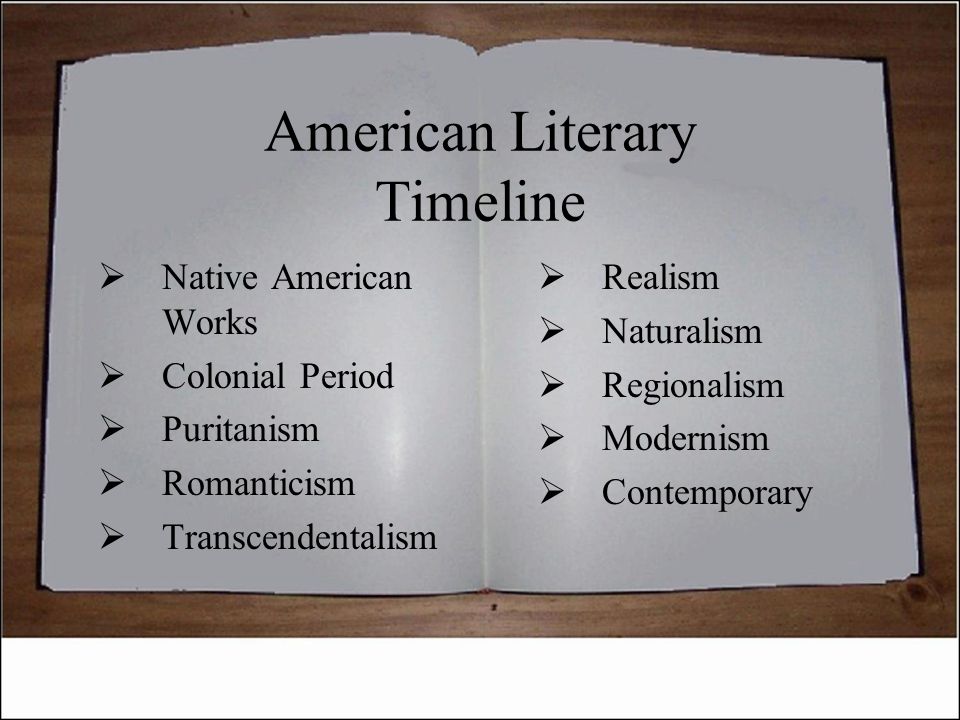
History of American Literature

American literature, literature in English produced in what is now the United States of America.

Colonial Literature:American writing began with the work of English adventurers and colonists in the New World chiefly for the benefit of readers in the mother country. Some of these early works reached the level of literature, as in the robust and perhaps truthful account of his adventures by Captain John Smith and the sober, tendentious journalistic histories of John Winthrop and William Bradford in New England. From the beginning, however, the literature of New England was also directed to the edification and instruction of the colonists themselves, intended to direct them in the ways of the godly.The first work published in the Puritan colonies was the Bay Psalm Book (1640), and the whole effort of the divines who wrote furiously to set forth their views—among them Roger Williams and Thomas Hooker—was to defend and promote visions of the religious state. They set forth their visions—in effect the first formulation of the concept of national destiny—in a series of impassioned histories and jeremiads from Edward Johnson's Wonder-Working Providence (1654) to Cotton Mather's epic Magnalia Christi Americana (1702).
Even Puritan poetry was offered uniformly to the service of God. Michael Wigglesworth's Day of Doom (1662) was uncompromisingly theological, and Anne Bradstreet's poems, issued as The Tenth Muse Lately Sprung Up in America (1650), were reflective of her own piety. The best of the Puritan poets, Edward Taylor, whose work was not published until two centuries after his death, wrote metaphysical verse worthy of comparison with that of the English metaphysical poet George Herbert.Sermons and tracts poured forth until austere Calvinism found its last utterance in the words of Jonathan Edwards. In the other colonies writing was usually more mundane and on the whole less notable, though the journal of the Quaker John Woolman is highly esteemed, and some critics maintain that the best writing of the colonial period is found in the witty and urbane observations of William Byrd, a gentleman planter of Westover, Virginia.
A New Nation and a New Literature:The approach of the American Revolution and the achievement of the actual independence of the United States was a time of intellectual activity as well as social and economic change. The men who were the chief molders of the new state included excellent writers, among them Thomas Jefferson and Alexander Hamilton. They were well supported by others such as Philip Freneau, the first American lyric poet of distinction and an able journalist; the pamphleteer Thomas Paine, later an attacker of conventional religion; and the polemicist Francis Hopkinson, who was also the first American musical composer.The variously gifted Benjamin Franklin forwarded American literature not only through his own writing but also by founding and promoting newspapers and periodicals. Many literary aspirants, such as John Trumbull, Timothy Dwight, Joel Barlow, and the other Connecticut Wits, used English models. The infant American theater showed a nationalistic character both in its first comedy, The Contrast (1787), by Royall Tyler, and in the dramas of William Dunlap. The first American novel, The Power of Sympathy (1789), by William Hill Brown, only shortly preceded the Gothic romance, Wieland (1799), by the first professional American novelist, Charles Brockden Brown.Recognition in Europe, and especially in England, was coveted by every aspiring American writer and was first achieved by two men from New York: Washington Irving, who first won attention by presenting American folk stories, and James Fenimore Cooper, who wrote enduring tales of adventure on the frontier and at sea. By 1825 William Cullen Bryant had made himself the leading poet of America with his delicate lyrics extolling nature and his smooth, philosophic poems in the best mode of romanticism. Even more distinctly a part of the romantic movement were such poets as Joseph Rodman Drake, Fitz-Greene Halleck, and Henry Wadsworth Longfellow, who won the hearts of Americans with glib, moralizing verse and also commanded international respect.
Ralph Waldo Emerson and Henry David Thoreau:stood at the center of transcendentalism, a movement that made a deep impression upon their native land and upon Europe. High-mindedness, moral earnestness, the desire to reform society and education, the assertion of a philosophy of the individual as superior to tradition and society—all these were strongly American, and transcendentalists such as Emerson, Thoreau, Margaret Fuller, and Bronson Alcott insisted upon such principles.Men as diverse as James Russell Lowell, Boston "Brahmin," poet, and critic, and John Greenleaf Whittier, the bucolic poet, joined in support of the abolitionist cause. The more worldly and correct Oliver Wendell Holmes reflected the vigorous intellectual spirit of the time, as did the historians William Hickling Prescott, George Bancroft, Francis Parkman, and John Lothrop Motley. Their solemn histories were as distinctly American as the broadly humorous writing that became popular early in the 19th cent. This was usually set forth as the sayings of semiliterate, often raffish, and always shrewd American characters like Hosea Biglow (James Russell Lowell), Artemus Ward (Charles Farrar Browne), Petroleum Vesuvius Nasby (David Ross Locke), Josh Billings (Henry Walker Shaw), and Sut Lovingood (G. W. Harris).Far removed from these humorists in spirit and style was Edgar Allan Poe, whose skilled and emotional poetry, clearly expressed aesthetic theories, and tales of mystery and horror won for him a more respectful audience in Europe than—originally, at least—in America. A number of seminal works of American literature were written during the 1850s. These include Nathaniel Hawthorne's novel The Scarlet Letter (1850), depicting the gloomy atmosphere of early Puritanism; Herman Melville's Moby-Dick (1851), which infused into an adventure tale of whaling days profound symbolic significance; and the rolling measures of Walt Whitman's Leaves of Grass (1st ed. 1855), which employed a new kind of poetry and proclaimed the optimistic principles of American democracy.
The Literature of a Split and a Reunited Nation:The rising conflict between the North and the South that ended in the Civil War was reflected in regional literature. The crusading spirit against Southern slavery in Harriet Beecher Stowe's overwhelmingly successful novel Uncle Tom's Cabin (1852) can be compared with the violent anti-Northern diatribes of William Gilmore Simms. While the Civil War was taking its inexorable course, the case for reunion was set forth by President Abraham Lincoln in that purest and most exact statement of American political ideals, the Gettysburg Address.Once the war was over, literature gradually regained a national identity amid expanding popularity, as writings of regional origin began to find a mass audience. The stories of the California gold fields by Bret Harte, the rustic novel (The Hoosier Schoolmaster; 1871) of Edward Eggleston, the rhymes of James Whitcomb Riley, the New England genre stories of Sarah Orne Jewett and Mary E. Wilkins Freeman, the sketches of Louisiana by George W. Cable, even the romance of the Old South woven by the poetry of Henry Timrod and Sidney Lanier and the fiction of Thomas Nelson Page—all were seized eagerly by the readers of the reunited nation. The outstanding example of genius overcoming any regionalism in scene can be found in many of the works of Mark Twain, most notably in his Huckleberry Finn (1884).Drama after the Civil War and into the 20th cent. continued to rely, as it had before, on spectacles, on the plays of Shakespeare, and on some of the works of English and Continental playwrights. A few popular plays such as Uncle Tom's Cabin and Rip Van Winkle were based on American fiction; others were crude melodrama. Realism, however, came to the theater with some of the plays of Bronson Howard, James A. Herne, and William Vaughn Moody.
Trends in American Fiction:The connection of American literature with writing in England and Europe was again stressed by William Dean Howells, who was not only an able novelist but an instructor in literary realism to other American writers. Though he himself had leanings toward social reform, Howells did encourage what has come to be called "genteel" writing, long dominant in American fiction. The mold for this sort of writing was broken by the American turned Englishman, Henry James, who wrote of people of the upper classes but with such psychological penetration, subtlety of narrative, and complex technical skill that he is recognized as one of the great masters of fiction. His influence was quickly reflected in the novels of Edith Wharton and others and continued to grow in strength in the 20th cent.
The realism preached by Howells was turned away from bourgeois milieus by a number of American writers, particularly Stephen Crane in his poetry and his fiction—Maggie: A Girl of the Streets (1893) and the Civil War story, The Red Badge of Courage (1895). These were forerunners of naturalism, which reached heights in the hands of Theodore Dreiser and Jack London, the latter a fiery advocate of social reform as well as a writer of Klondike stories.Ever since the Civil War, voices of protest and doubt have been heard in American fiction. Mark Twain (with Charles Dudley Warner) had in The Gilded Age (1873) held the postwar get-rich-quick era up to scorn. By the early 20th cent. Henry Adams was musing upon the effects of the dynamo's triumph over man, and Ambrose Bierce literally abandoned a civilization he could not abide.
American Verse:Since the mid-19th cent. American poetry had tended to empty saccharine verse—with the startling exception of the Amherst recluse, Emily Dickinson, whose terse, precise, and enigmatic poems, published in 1890, after her death, placed her immediately in the ranks of major American poets. A revolution in poetry was announced with the founding in 1912 of Poetry: A Magazine of Verse, edited by Harriet Monroe. It published the work of Ezra Pound and the proponents of imagism (see imagists)—Amy Lowell, H. D. (Hilda Doolittle), John Gould Fletcher, and their English associates, all declaring against romantic poetry and in favor of the exact word.Meanwhile, other poets moved along their own paths: Edwin Arlington Robinson, who wrote dark, brooding lines on humankind in the universe; Edgar Lee Masters, who used free verse for realistic biographies in A Spoon River Anthology (1915); his friend Vachel Lindsay, who wrote mesmerizingly rhythmical verse; Carl Sandburg, who tried to capture the speech, life, and dreams of America; and Robert Frost, who won universal recognition with his evocative and seemingly simply written verse.
The Lost Generation and After:The years immediately after World War I brought a highly vocal rebellion against established social, sexual, and aesthetic conventions and a vigorous attempt to establish new values. Young artists flocked to Greenwich Village, Chicago, and San Francisco, determined to protest and intent on making a new art. Others went to Europe, living mostly in Paris as expatriates. They willingly accepted the name given them by Gertrude Stein: the lost generation. Out of their disillusion and rejection, the writers built a new literature, impressive in the glittering 1920s and the years that followed.Romantic clichés were abandoned for extreme realism or for complex symbolism and created myth. Language grew so frank that there were bitter quarrels over censorship, as in the troubles about James Branch Cabell's Jurgen (1919) and—much more notably—Henry Miller's Tropic of Cancer (1931). The influences of new psychology and of Marxian social theory were also very strong. Out of this highly active boiling of new ideas and new forms came writers of recognizable stature in the world, among them Ernest Hemingway, F. Scott Fitzgerald, William Faulkner, Thomas Wolfe, John Dos Passos, John Steinbeck, and E. E. Cummings.Eugene O'Neill came to be widely considered the greatest of the dramatists the United States has produced. Other writers also enriched the theater with comedies, social reform plays, and historical tragedies. Among them were Maxwell Anderson, Philip Barry, Elmer Rice, S. N. Behrman, Marc Connelly, Lillian Hellman, Clifford Odets, and Thornton Wilder. The social drama and the symbolic play were further developed by Arthur Miller, William Inge, and Tennessee Williams.
By the 1960s the influence of foreign movements was much felt with the development of "off-Broadway" theater. One of the new playwrights who gained special notice at the time was Edward Albee, whose later works again attracted attention in the 1990s. Important playwrights of recent decades who have imbued the modern world with qualities ranging from menace to a kind of grace in their surreal or hyper-real works include Sam Shepard, David Mamet, and Tony Kushner.The naturalism that governed the novels of Dreiser and the stories of Sherwood Anderson was intensified by the stories of the Chicago slums by James T. Farrell and later Nelson Algren. Violence in language and in action was extreme in some of the novels of World War II, notably those of James Jones and Norman Mailer. Not unexpectedly, after World War I, black writers came forward, casting off the sweet melodies of Paul Lawrence Dunbar and speaking of social oppression and pervasive prejudice. Countee Cullen, James Weldon Johnson, Claude McKay, Zora Neale Hurston, and Langston Hughes in the 1920s and 30s were succeeded by Richard Wright, Ralph Ellison, James Baldwin, and LeRoi Jones (later Amiri Baraka) in the 1940s and 50s.

Poetry after World War I was largely dominated by T. S. Eliot and his followers, who imposed intellectuality and a new sort of classical form that had been urged by his fellow expatriate Ezra Pound. Eliot was also highly influential as a literary critic and contributed to making the period 1920–60 one that was to some extent dominated by literary analysts and promoters of various warring schools. Among those critics were H. L. Mencken, Edmund Wilson, Lewis Mumford, Malcolm Cowley, Van Wyck Brooks, John Crowe Ransom, Yvor Winters, Lionel Trilling, Allen Tate, R. P. Blackmur, Robert Penn Warren, and Cleanth Brooks.
The victories of the new over the old in the 1920s did not mean the disappearance of the older ideals of form even among lovers of the new. Much that was traditional lived on in the lyrics of Conrad Aiken, Sara Teasdale, Edna St. Vincent Millay, and Elinor Wylie. In the later years of the period two poets of unusual subtlety and complexity gained world recognition, though they had been quietly writing long before: Wallace Stevens and William Carlos Williams. The admirable novels of Willa Cather did not resort to new devices; the essays of E. B. White were models of pure style, as were the stories of Katherine Anne Porter and Jean Stafford.
In this period humor left far behind the broadness of George Ade's Fables (1899) for the acrid satire of Ring Lardner and the highly polished style of Robert Benchley and James Thurber. The South still produced superb writers, notably Carson McCullers, Walker Percy, Flannery O'Connor, and Eudora Welty, whose works, while often grotesque, were also compassionate and humorous.
The tension, horror, and meaninglessness of contemporary American life became a major theme of novelists during the 1960s and 70s. While authors such as Saul Bellow, Bernard Malamud, Hortense Calisher, and Philip Roth presented the varied responses of urban intellectuals, usually Jews, and John Updike and John Cheever treated the largely Protestant middle class, William Burroughs, Joyce Carol Oates, and Raymond Carver unsparingly depicted the conflict and violence inherent in American life at all levels of society.
Irony and so-called black humor were the weapons of authors like Roth, Joseph Heller, and Jules Feiffer. However, other writers, notably Donald Barthelme, Jerzy Kosinski, Thomas Pynchon, and Kurt Vonnegut, Jr., expressed their view of the world as unreal, as mad, by writing fantasies that were by turns charming, obscure, exciting, profound, and terrifying. Many of these writers have been called postmodern, but the term encompasses a number of charactistics, including multiculturalism, self-reflection, and attention to new means of communication.
Although the poets Allen Ginsberg, Gregory Corso, and Lawrence Ferlinghetti gained initial recognition as part of the beat generation, their individual reputations were soon firmly established. Writers of "perceptual verse" such as Charles Olson, Robert Creeley, Denise Levertov, and Robert Duncan became widely recognized during the 1960s. One of the most provocative and active poets of the decade was Robert Lowell, who often wrote of the anguish and corruption in modern life. His practice of revelation about his personal life evolved into so-called confessional poetry, which was also written by such poets as Anne Sexton, Sylvia Plath, and, in a sense, John Berryman. Accomplished poets with idiosyncratic styles were Elizabeth Bishop and James Dickey. To some degree, poetry has also become polarized along ideological lines, as shown in the work of feminist poet Adrienne Rich. Meanwhile, the bittersweet lyrics of James Merrill expressed the concerns of a generation.
The pressure and fascination of actual events during the 1960s intrigued many writers of fiction, and Truman Capote, John Hersey, James Michener, and Norman Mailer wrote with perception and style about political conventions, murders, demonstrations, and presidential elections. Post–Vietnam War American literature has called into question many previously unchallenged assumptions about life. In addition, writing in many prose styles, such novelists as Don DeLillo, Peter Taylor, William Kennedy, Richard Ford, Robert Stone, E. Annie Proulx, and T. Coraghessen Boyle have explored a wide variety of experiences and attitudes in contemporary American society. The literature of the 1980s and 90s also encompasses the work of African-American (e.g., Nobel Prize–winner Toni Morrison, Alice Walker, and Gloria Naylor), Latino (e.g., Oscar Hijuelos, Rudolfo Anaya, and Sandra Cisneros), Native American (e.g., Louise Erdrich and N. Scott Momaday), Asian-American (e.g., Maxine Hong Kingston and Amy Tan), and homosexual (e.g., Edmund Wilson, David Leavitt, and Rita Mae Brown) writers, who previously were often excluded or ignored in mainstream literature


.

Saturday, 20 January 2018

A Brief Overview of American Literary Periods

American Literature does not easily lend itself to classification by time period. Given the size of the United States and it's varied population, there are often several literary movements happening at the same time. However, this hasn't stopped literary scholars from attempting. Here are some of the most commonly agreed upon periods of American literature from the colonial period to the present.
The Colonial Period (1607 – 1775)
This period encompasses the founding of Jamestown up to the Revolutionary War. The majority of writings were historical, practical, or religious in nature. Some writers not to miss from this period include Phillis Wheatley, Cotton Mather, William Bradford, Anne Bradstreet, and John Winthrop. The first Slave Narrative, A Narrative of the Uncommon Sufferings, and Surprizing Deliverance of Briton Hammon, a Negro Man, was published in Boston in 1760.
The Revolutionary Age (1765 – 1790)
Beginning a decade before the Revolutionary War and ending about 25 years later, this period includes the writings of Thomas Jefferson, Thomas Paine, James Madison and Alexander Hamilton. This is arguably the richest period of political writing since classical antiquity. Important works include the “Declaration of Independence,” The Federalist Papers and the poetry of Joel Barlow and Philip Freneau.
The Early National Period (1775 – 1828)
This era in American Literature is responsible for notable first works, such as the first American comedy written for the stage (The Contrast by Royall Tyler, 1787) and the first American Novel (The Power of Sympathy by William Hill, 1789). Washington Irving, James Fenimore Cooper and Charles Brockden Brown are credited with creating distinctly American fiction, while Edgar Allan Poe and William Cullen Bryant began writing poetry that was markedly different from that of the English tradition.
The American Renaissance (1828 – 1865)
Also known as the Romantic Period in America and the Age of Transcendentalism, this period is commonly accepted to be the greatest of American Literature. Major writers include Walt Whitman, Ralph Waldo Emerson, Henry David Thoreau, Nathaniel Hawthorne, Edgar Allan Poe and Herman Melville. Emerson, Thoreau and Margaret Fuller are credited with shaping the literature and ideals of many later writers. Other major contributions include the poetry of Henry Wadsworth Longfellow and the short stories of Melville, Poe, Hawthorne and Harriet Beecher Stowe. In addition, this era is the inauguration point of American Literary Criticism, lead by Poe, James Russell Lowell and William Gilmore Simms. The years 1853 and 1859 brought the first African-American novels (Clotel and Our Nig).
The Realistic Period (1865 – 1900)
As a result of the American Civil War, Reconstruction and the age of Industrialism, American ideals and self-awareness changed in profound ways, and American literature responded. Certain romantic notions of the American Renaissance are replaced by realistic descriptions of American life, such as those represented in the works of William Dean Howells, Henry James and Mark Twain.
This period also gave rise to regional writing, such as the works of Sarah Orne Jewett, Kate Chopin, Bret Harte, Mary Wilkins Freeman and George W. Cable. In addition to Walt Whitman, another master poet, Emily Dickinson, appeared at this time.
The Naturalist Period (1900 – 1914)
This relatively short period is defined by its insistence on recreating life as life really is, even more so than the realists had been doing in the decades before. American Naturalist writers such as Frank Norris, Theodore Dreiser and Jack London created some of the most powerfully raw novels in American literary history. Their characters are victims who fall prey to their own base instincts and to economic and sociological factors. Edith Wharton wrote some of her most beloved classics, such as The Custom of the Country (1913), Ethan Frome (1911) and House of Mirth (1905) during this time period.
The Modern Period (1914 – 1939)
After the American Renaissance, the Modern Period is the second most influential and artistically rich age of American writing. Its major writers include such powerhouse poets as E.E. Cummings, Robert Frost, Ezra Pound, William Carlos Williams, Carl Sandburg, T.S. Eliot, Wallace Stevens and Edna St. Vincent Millay. Novelists and other prose writers of the time include Willa Cather, John Dos Passos, Edith Wharton, F. Scott Fitzgerald, John Steinbeck, Ernest Hemingway, William Faulkner, Gertrude Stein, Sinclair Lewis, Thomas Wolfe and Sherwood Anderson. The Modern Period contains within it certain major movements including the Jazz Age, the Harlem Renaissance, and the Lost Generation. Many of these writers were influenced by World War I and the disillusionment that followed, especially the expatriates of the Lost Generation. Furthermore, the Great Depression and the New Deal resulted in some of America’s greatest social issue writing, such as the novels of Faulkner and Steinbeck, and the drama of Eugene O’Neill.
The Beat Generation (1944 – 1962)
Beat writers, such as Jack Kerouac and Allen Ginsberg, were devoted to anti-traditional literature, in poetry and prose, and anti-establishment politics. This time period saw a rise in confessional poetry and sexuality in literature, which resulted in legal challenges and debates over censorship in America. William S. Burroughs and Henry Miller are two writers whose works faced censorship challenges and who, along with other writers of the time, inspired the counterculture movements of the next two decades.
The Contemporary Period (1939 – Present)
After World War II, American literature becomes broad and varied in terms of theme, mode, and purpose. Currently, there is little consensus as to how to go about classifying the last 80 years into periods or movements – more time must pass, perhaps, before scholars can make these determinations. That being said, there are a number of important writers since 1939 whose works may already be considered “classic” and who are likely to become canonized. Some of these are: Kurt Vonnegut, Amy Tan, John Updike, Eudora Welty, James Baldwin, Sylvia Plath, Arthur Miller, Toni Morrison, Ralph Ellison, Joan Didion, Thomas Pynchon, Elizabeth Bishop, Tennessee Williams, Sandra Cisneros, Richard Wright, Tony Kushner, Adrienne Rich, Bernard Malamud, Saul Bellow, Joyce Carol Oates, Thornton Wilder, Alice Walker, Edward Albee, Norman Mailer, John Barth, Maya Angelou and Robert Penn Warren.


What Is the Difference Between Drama and Play? A Complete Guide

What Is the Difference Between Drama and Play? A Complete Guide What Is the Difference Betwe...